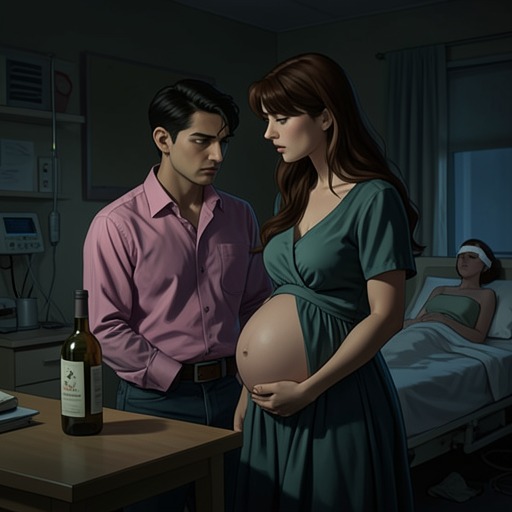
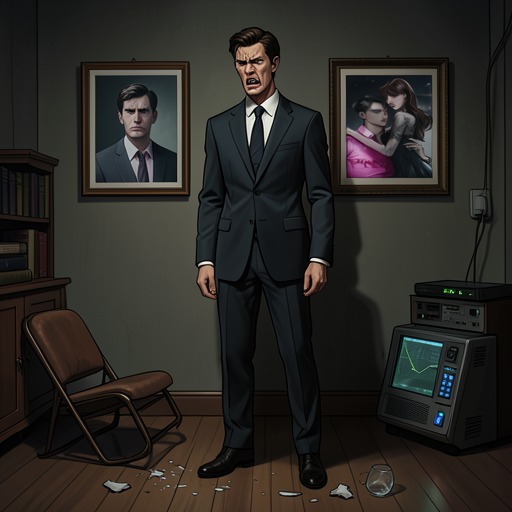
Event 1
Vixon Hired by Yohan as a Second Assistant
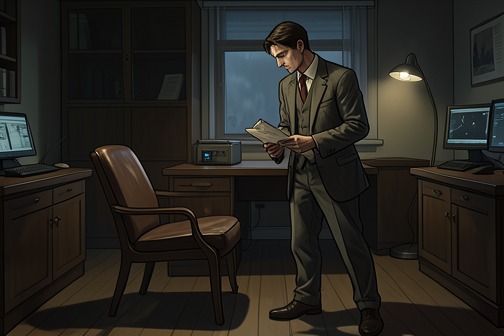
[Vixon Hired by Yohan as a Second Assistant](entity:event-recall-event-vixon-yohan-8b6c4a73df40) is the decisive opening of Vixon’s formal connection to Yohan’s company. What begins as a request for employment becomes an act of immediate rescue: Vixon has lost his previous job, is short of money, and has been starving, while Yohan’s private fondness makes rejection difficult. Yohan’s impulsive offer creates a second-assistant position, places Vixon beneath an already established office arrangement with Kazumi, and gives their later relationship a direct economic and institutional foundation.
## Causes and Background
Vixon approaches Yohan with a practical question about whether the company has an available position. The request surprises Yohan, who had apparently assumed that Vixon already had work. Yohan’s response is shaped by more than ordinary recruitment: he admits inwardly that Vixon is his crush and that he does not want to reject the application. Nervousness makes him answer with the vague position of “Assistant,” turning an improvised reply into an actual job offer.
The immediate reason for Vixon’s application is financial distress. He explains that he was fired from his job, does not know where to find money, and has gone hungry for several days. Yohan reacts with pity rather than conducting a formal evaluation of qualifications or suitability. The hiring therefore emerges from the overlap of compassion and attraction. Vixon needs food and income; Yohan possesses the authority to provide both, and his personal feelings make that authority especially susceptible to impulsive use.
## The Hiring Decision
Yohan tells Vixon, “Okay, you're hired.” The decision is presented as instantaneous, with no evidence of a competitive process, probationary negotiation, or comparison with other candidates. Vixon’s surprise confirms how quickly the interview changes direction. His response is not merely professional relief: after thanking Yohan, he hugs him and says that he will finally be able to eat. The physical embrace intensifies the emotional force of the transaction, and Yohan experiences it as something that melts his heart.
Yohan then instructs Vixon to begin the following day and allows him to roam around the company to familiarize himself with the workplace. The arrangement combines a clear start date with informal access to the organization. Vixon is not only given employment but also an immediate path into Yohan’s daily environment, where professional proximity can develop into personal familiarity. The offer thus solves Vixon’s immediate material crisis while opening a much wider field of dependency and attachment.
## Workplace Structure and Tension
The new appointment immediately complicates the company’s existing hierarchy. When Kazumi asks about another assistant, Yohan explains that Vixon was fired from his job and had no food, presenting the hiring as an unavoidable act of mercy. Kazumi’s skeptical reaction shows that the decision is not treated as a neutral administrative matter. Yohan must justify why Vixon has been admitted, and his explanation emphasizes poverty rather than professional need.
Later, Yohan proposes moving Vixon to a vacant room on the eighth floor. The suggestion is partly a workplace-management decision and partly a way of creating distance within the office. Kazumi points out that their own office is on the sixth floor, so the relocation would place Vixon higher rather than farther away in any simple sense. The exchange reveals how physical office placement becomes entangled with interpersonal tension: floors, rooms, meetings, schedules, and access are all part of the company’s power structure.
The organization also contains a clear operational network beyond the assistants. When [Nestor](entity:character-recall-character-nestor-2f7fcc1f5095) is ill and cannot drive, Yohan receives notice that Delphin, Crusio, Dan, Kanor, Sander, and Falley are available but that one driver is still missing. Yohan decides to go and look for another driver himself. This detail places Vixon’s hiring inside a larger system of assistants, workers, drivers, and managerial decisions rather than an isolated private favor. The company depends on delegated labor, but Yohan retains the authority to rearrange duties when the system fails.
## Secrecy and Later Consequences
The hiring’s consequences extend beyond Vixon’s first day. Later, when Kazumi is visibly pregnant and no longer wears oversized clothes, Yohan orders the company workers not to tell Vixon about the pregnancy. The workers obey, leaving Vixon unaware. This secrecy demonstrates how the company’s formal hierarchy can be used to control personal information: Yohan converts employees into a protective barrier around Kazumi and turns workplace obedience into a mechanism for concealing a major private fact.
Kazumi’s pregnancy is particularly significant because the surrounding circumstances make it difficult to separate office administration from intimate conflict. Yohan manages schedules, meetings, office locations, and employee knowledge while also attempting to regulate who can see or learn about Kazumi’s condition. Vixon’s original entry into the company as a hungry, unemployed applicant therefore becomes the foundation for a later structure of concealed information and unequal access. The compassionate appointment does not remain a single act of kindness; it produces obligations, proximity, suspicion, and opportunities for manipulation.
The later violence associated with the broader conflict gives the original employment decision an even darker retrospect. Vixon eventually enters Yohan’s home carrying a gun taken from the police and demands that the household staff reveal Yohan’s location, threatening to shoot them if they refuse. This confrontation is not part of the hiring scene itself, but it shows how far the relationship’s institutional beginning can be displaced by hostility. The man once welcomed because he could not afford food ultimately uses force to penetrate Yohan’s private space.
## Narrative Significance
The event establishes a central contradiction in Yohan’s authority. He is capable of practical care: he responds to hunger, offers immediate work, and gives Vixon a place in a functioning company. Yet the same authority is personal and discretionary. The position is created in nervous improvisation, shaped by a crush, and defended through an emotional explanation to Kazumi. Employment is therefore never purely professional in this narrative; it is also a language through which desire, pity, access, and control are distributed.
Vixon’s appointment also creates the structural triangle that drives the later story. Kazumi is already present as Yohan’s assistant, Vixon becomes the additional assistant, and Yohan stands at the center of both administrative and emotional decisions. The arrangement places the two assistants in relation to one another while giving Yohan control over their schedules, offices, information, and continued proximity. The event’s significance lies less in the job title itself than in the network it activates: a desperate application becomes an act of rescue, the rescue becomes workplace dependency, and that dependency later carries the force of betrayal and conflict.
Event 2
Vixon Begins Manipulating Yohan and Framing Kazumi
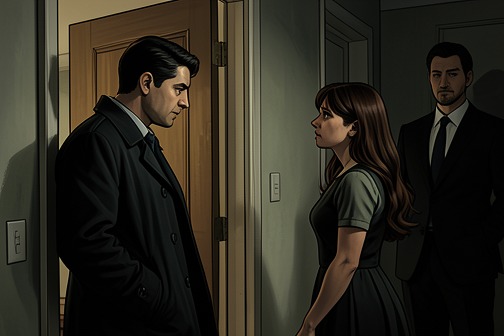
[Vixon Begins Manipulating Yohan and Framing Kazumi](entity:event-recall-event-vixon-yohan-kazumi-187f47b91afa) is the first clear movement from romantic infatuation into manufactured hostility. Vixon does not confront Kazumi directly; instead, he supplies Yohan with a story designed to make an existing friendship look treacherous. Because Yohan is deeply in love with Vixon, the accusation reaches him through the very attachment that should have made him cautious, and the scene turns private desire into a weapon against Kazumi.
## Causes and Narrative Situation
Yohan and Vixon are together without an official label, yet Yohan is already determined to keep the relationship alive through Christmas; the scene takes place on November 26, giving his hope a concrete deadline. Their flirtation has drawn Kazumi’s attention, and Yohan has noticed her rolling her eyes while they playfully interact. That small gesture becomes the raw material for Vixon’s larger allegation. The evidence does not establish that Kazumi was actually plotting against them; it establishes only that Yohan saw her react negatively to their behavior, while Vixon interprets and enlarges that reaction.
The conversation is presented through Yohan’s highly emotional perspective. He speaks in a playful, self-conscious register, openly acknowledging that he is in love with Vixon, but he also claims that love normally does not make him believe everything a person says about his friends. The contradiction is central to the event: Yohan imagines himself as capable of independent judgment, yet Vixon’s carefully chosen explanation overrides that judgment almost immediately.
## Vixon’s Accusations
Vixon first suggests that he knows what the others are discussing and then identifies the subject as Yohan and himself. He points to Kazumi’s earlier eye-rolling and her complaint that they were being noisy, presenting those ordinary signs of irritation as evidence that Kazumi and the man accompanying her are speaking maliciously about them. The accusation is not supported by any reported conversation or direct action from Kazumi. It is a conjecture presented with enough seriousness to feel like knowledge.
Vixon then adds a more intimate and damaging claim: he says that Kazumi tried to seduce him after he left the office following the job interview the previous day. This allegation shifts the issue from social annoyance to personal betrayal. For Yohan, Kazumi is no longer merely a friend who disapproves of excessive flirting; she becomes, in his understanding, someone who has targeted the person he loves. The accusation also gives Vixon a way to present himself as the vulnerable object of Kazumi’s supposed pursuit while positioning Yohan as the betrayed partner who must choose sides.
## Yohan’s Conversion from Trust to Suspicion
Yohan processes the story in shocked outrage, treating the alleged seduction as proof that his best friend has betrayed him. His response reveals how quickly affection reorganizes his loyalties. He does not investigate Kazumi’s motives, ask her what happened, or test Vixon’s account against independent evidence. Instead, the emotional force of the accusation supplies its own apparent confirmation: because Yohan already fears losing Vixon and wants the relationship to reach Christmas, Kazumi’s presence becomes an obstacle to be condemned.
The scene’s value shift is therefore abrupt. Before Vixon speaks, Kazumi and Yohan remain friends, and Vixon is the person Yohan is trying to keep close. After Vixon’s claims, Kazumi is recast as a traitor and Vixon as the person who must be defended. Yohan’s love does not simply coexist with his judgment; it becomes the channel through which Vixon redirects his judgment. The playful atmosphere surrounding the couple gives way to suspicion, resentment, and a hostile reception for Kazumi.
## Exposure of the Manipulation
The narration undercuts Yohan’s conclusion immediately by declaring that he is foolish to believe Vixon’s statements, which are described as fake news. This disclosure creates a sharp separation between what Yohan believes and what the reader is told. Yohan’s confidence in the accusation is not evidence of its truth; it is evidence of the effectiveness of Vixon’s manipulation. The event is consequently built on dramatic irony: Yohan treats fabrication as revelation while the narrative identifies it as deception.
That split also makes Vixon’s method visible. His manipulation proceeds through accumulation rather than a single dramatic lie. He begins with a vague suggestion, supplies a remembered gesture, adds Kazumi’s complaint about noise, and finally introduces the more explosive claim that she attempted seduction. Each detail appears to reinforce the previous one, although none proves the next. The result is a false pattern that feels persuasive because it converts isolated observations into a coherent story of betrayal.
## Immediate Consequences and Significance
When Kazumi returns after speaking with [Yukim](entity:character-recall-character-yukim-4fb9c5068f82), Yohan responds coldly, treating her with hostility and raising an eyebrow at her rather than welcoming her. This is the first concrete consequence of Vixon’s story: the lie leaves the conversation and enters the social world as changed behavior. Kazumi has not been shown confronting Yohan or Vixon in this moment, yet she is punished for an accusation she does not know she has been made to answer.
The event establishes the larger conflict as one driven by misunderstanding and rumor rather than by a verified act of betrayal. It also exposes the fragility of Yohan’s friendship with Kazumi at this stage of the narrative. His love for Vixon gives Vixon unusual influence, while the narrator’s correction ensures that the reader can see the injustice of Kazumi’s sudden exclusion. In structural terms, the scene begins the chain in which Vixon’s false account separates Yohan from Kazumi and turns romantic attachment into an instrument of control.
Event 3
Kazumi Discovers Vixon and Zhara Having Sex

[Kazumi Discovers Vixon and Zhara Having Sex](entity:event-recall-event-kazumi-vixon-zhara-e2b796b06645) is a pivotal discovery in which Kazumi unexpectedly witnesses [Vixon Rae](entity:character-recall-character-vixon-rae-39eead992407) and [Zhara](entity:character-recall-character-zhara-8eba1de73fec) having sex inside the Company office. The scene transforms Vixon Rae from an irritating and distrusted coworker into someone caught in a secret sexual relationship with Zhara, and it gives Kazumi information she immediately decides to report to [Yohan Xyle Laroses](entity:character-recall-character-yohan-xyle-laroses-ef74df86f5bc). Although the discovery initially concerns Vixon Rae and Zhara alone, it contributes to the broader atmosphere of suspicion, humiliation, and concealed intimacy that shapes the relationships surrounding Yohan Xyle Laroses and [Kazumi Lhynx Valeres](entity:character-recall-character-kazumi-lhynx-valere-56963f26306e).
## Causes and Setting
The event occurs when Kazumi is entering the office and hears groaning before she sees anything. The sound makes her stop, frown, and open the door slowly, remaining quiet so that the people inside will not notice her. The office is therefore not merely a workplace backdrop: it becomes the site where private conduct is exposed and where the boundary between professional authority and personal behavior collapses.
Kazumi’s reaction is intensified by her existing hostility toward Vixon Rae. She already regards him as foolish and deeply irritating, and the discovery confirms, in her view, the contempt she has directed toward him. Zhara is likewise presented through Kazumi’s judgment as a disliked and abrasive worker whom many people resent because of her behavior. The encounter consequently arrives preloaded with antagonism; Kazumi does not witness the pair neutrally, but interprets what she sees through an established pattern of distrust and resentment.
## What Kazumi Sees
When Kazumi opens the door, she sees Vixon Rae having sex with a woman and then recognizes the woman as Zhara. The discovery is immediate and unmistakable: the sounds she heard are identified as sexual activity, and the two employees are together inside the office rather than in a private setting away from the Company. Kazumi is shocked and unable to believe what she has witnessed. She closes the door slowly, preserving her concealment while trying to absorb the scene.
Her narration responds to the event with disgust, mockery, and moral condemnation. She ridicules Vixon Rae’s body and treats his sexual behavior as another explanation for what she considers his incompetence. She also characterizes Zhara as sexually opportunistic and money-hungry, reducing the encounter to a grotesque pairing of traits she already despises. The language is deliberately excessive: the event is not processed as a quiet secret but as an offensive spectacle that Kazumi feels compelled to circulate.
## Immediate Disclosure
Kazumi decides that Yohan Xyle Laroses must hear about the encounter when he returns. She later tells two others that Vixon Rae, not Yohan Xyle Laroses, was the person having sex, clarifying the misunderstanding before naming both Vixon Rae and Zhara. Her disclosure turns a hidden act into shared office knowledge and makes her a witness whose account can alter how the two employees are viewed.
The telling also reveals Kazumi’s position within the Company. She is an assistant to Yohan Xyle Laroses, the sole boss she identifies as her employer, and she treats access to information about employees as part of her responsibility to him. Yet the force of her disclosure is not purely administrative. Her disgust, ridicule, and anger shape the report, so the event travels through the workplace as both information and accusation.
## Consequences and Narrative Function
The discovery establishes a pattern in which sexual secrets produce social and organizational consequences. An office intended for work becomes a place of exposure, while the act itself is remembered less as private intimacy than as an offense against workplace order. Kazumi’s decision to report what she saw places Vixon Rae and Zhara under the scrutiny of Yohan Xyle Laroses and the wider office community, even though the available scene does not record the later disciplinary result directly.
The event also foreshadows later scenes in which drunkenness, mistaken identity, and sexual contact destabilize relationships. Several hours into a later drinking session, everyone is drunk; Yohan Xyle Laroses is dared to kiss the person in front of him and mistakenly believes that person is Vixon Rae, when the person is actually Kazumi Lhynx Valeres. Their kiss is returned and continues as they are taken to a room. Kazumi later realizes that no condom was apparently used and recognizes that the encounter may lead to an unexpected pregnancy. The contrast is significant: Kazumi first occupies the position of horrified observer of another couple’s hidden sex, then becomes directly involved in an accidental sexual event whose consequences include responsibility, cohabitation, marriage, and parenthood.
In that larger structure, Kazumi Discovers Vixon and Zhara Having Sex is not an isolated scandal. It is an early exposure of the story’s unstable sexual and professional boundaries, a scene where witnessing becomes power and secrecy becomes plot. Its immediate value shift moves Kazumi from uncertainty to certainty, and from private shock to public disclosure; its lasting importance lies in how it prepares the narrative for later revelations in which intimacy repeatedly escapes the spaces and identities meant to contain it.
Event 4
Yohan与Kazumi的争吵
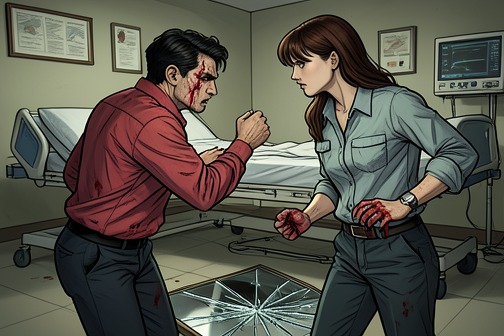
Yohan and Kazumi's quarrel is the decisive rupture between two former best friends: a dispute over Vixon becomes a violent confrontation that destroys their trust, exposes Yohan's emotional dependence on Vixon's version of events, and leaves Kazumi unconscious in the [Hospital](entity:location-recall-location-hospital-c01787595258). The scene is not merely an argument. It converts a friendship into enmity in Yohan's eyes and makes the conflict physically consequential.
## Causes and Background
The quarrel grows out of Kazumi's alarm over Vixon's influence on Yohan. She tells Yohan that he is too quick to believe someone when he is deeply in love with that person, and that his attachment makes him vulnerable to lies. Her warning is aimed at what she sees as a pattern: Yohan is accepting Vixon's claims because his feelings have overridden his judgment. The argument therefore carries two competing understandings of loyalty. Kazumi treats friendship as the duty to intervene when Yohan is being deceived, while Yohan interprets her intervention as an attempt to prevent his happiness with Vixon.
Kazumi then raises the most serious accusation in the scene. She says that she saw Vixon having sex with [Zhara](entity:character-recall-character-zhara-8eba1de73fec) in the Office when no one else was present. The revelation is interrupted before she can finish explaining it, but its function is clear: she is trying to connect Vixon's manipulation of Yohan with a concealed sexual relationship. The disclosure threatens the image of Vixon that Yohan has chosen to trust, and it also shows how little room remains for calm interpretation between the two friends.
## The Quarrel and Physical Escalation
Yohan reacts with anger rather than investigation. He slaps Kazumi before she can complete her warning, making his disbelief an act of bodily domination. He insists that Kazumi has changed since Vixon began working there and refuses to grant her special credibility merely because she was once his best friend. His response specifically downgrades their relationship from a present bond to a past one, while accusing her of lying and declaring that Vixon could never do what she describes.
The emotional break becomes explicit when Yohan says that he can no longer consider Kazumi his best friend and feels that she is his enemy. He frames the conflict as a question of his right to be happy with Vixon, asking why Kazumi refuses to let him be happy. The scene thus reverses the meaning of her warning: concern is recast as hostility, and Yohan's desire for happiness becomes the justification through which he dismisses the person who knows him best.
Kazumi continues trying to argue that Vixon will not make Yohan happy and is only using him. She cannot finish this second warning. Yohan grabs her hair and pulls it violently. Kazumi cries out for him to stop, describing the pain of the hair-pulling alongside the pain caused by his words. The two injuries are presented together: the friendship is damaged through speech, while the body registers the damage through force. The escalation has no negotiated resolution. Kazumi becomes dizzy, feels close to fainting, pleads for Yohan to stop, and then loses consciousness.
## Witnessing and Immediate Aftermath
Vixon observes the confrontation from near the doorway without Kazumi or Yohan noticing him. His perspective reveals that the quarrel is not simply an accidental explosion. He regards the scene as a successful mission, watches Kazumi beg Yohan to stop pulling her hair, and leaves while the two continue fighting. His silent amusement and satisfaction position him as a hidden beneficiary of the rupture: the former friends are destroying their bond while he remains outside the direct line of accusation.
Yohan's behavior changes once Kazumi collapses. After leaving the confrontation, Vixon notes that Yohan panics. Yohan then takes Kazumi to the Hospital immediately. Three hours later, he is still there because she has not regained consciousness, and he anxiously asks the doctor how she is. The Hospital sequence does not erase the assault, but it establishes a stark reversal in Yohan's position: the person he has just called an enemy is now someone whose condition demands his immediate care.
## Consequences and Narrative Significance
The quarrel produces a major value shift. At its beginning, Kazumi and Yohan still occupy the unstable ground of intimate friendship, with Kazumi attempting to protect him through an accusation he does not want to hear. By the end, Yohan has verbally severed the friendship, physically attacked Kazumi, and caused her to lose consciousness. Trust, once treated as the foundation of their relationship, has become the source of the accusation that she is interfering with his happiness.
The scene also demonstrates how misunderstanding becomes dangerous when filtered through emotional allegiance. Kazumi's evidence is incomplete because Yohan interrupts it, but his refusal to hear it is not neutral: he has already decided that Vixon is innocent and Kazumi is lying. Vixon's concealed witnessing sharpens the irony. The person who claims to want Yohan's happiness is able to watch Yohan injure the friend who challenges him, while the consequences fall on Kazumi's body and on Yohan's conscience.
Narratively, the event functions as the dark break in Yohan and Kazumi's relationship. It gives physical form to a conflict that had previously been carried by suspicion, jealousy, and competing loyalties. Kazumi's unconsciousness ends the argument without settling its truth, leaving the accusation against Vixon unresolved while making the damage between Yohan and Kazumi undeniable. Yohan's presence at the Hospital suggests panic and responsibility after the violence, but it does not undo the decisive fact that the friendship has crossed into direct harm.
Event 5
Yohan's Company Staff Retreat and Birthday Party
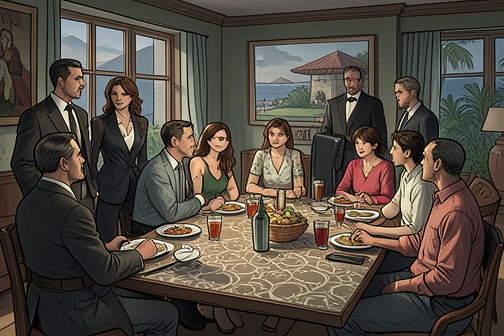
[Yohan's Company Staff Retreat and Birthday Party](entity:event-recall-event-yohan-4b886da18665) turns a birthday celebration into a five-day company outing and a public thank-you to the employees whose work helped make Yohan's company successful. Planned as a reward as well as a chance for staff to relax, the retreat brings corporate recognition into a resort setting; at the birthday party, however, Yohan's cold treatment of Kazumi makes clear that the occasion's festive surface does not resolve their personal strain.
## Occasion and Purpose
Yohan first notes that his birthday is two weeks away and plans a pool party at a private resort rather than at his mansion. He intends to reserve the whole resort for the workers and celebrate with them before arranging time with his friends on the following day. His family is far away in [Laguna](entity:location-recall-location-laguna-0f6141f44f17) while he is in [Cavite](entity:location-recall-location-cavite-88877c529a7b), where they manage a company, so the employee celebration also takes shape around the people close at hand.
At a company gathering, Yohan frames the outing as recognition of collective effort. He tells the employees that the company would not have become successful without them and thanks them for their contribution. His announcement then joins his birthday to the company's success: the resort celebration is not simply a private party funded by the CEO, but a reward offered to the workforce. The employees answer his thanks with applause and cheers; when Yohan raises his hand, they stop, and then cheer again when he announces the trip. His gestures briefly direct the room's attention and excitement, while the substance of his announcement credits the workers for the company's achievements.
Yohan says the outing will take place the following week and last five days. He presents the stay as a break from tiring and stressful work, and describes it as a way to give something back. The retreat therefore has two connected purposes: to celebrate his birthday and the company's success, and to let employees rest. Its length makes the reward more than a single evening's entertainment.
## Arrangements and Departure
The scale of the outing requires practical planning. Yohan says his vans can carry about twenty-five people each, but that one van will not be enough for everyone. The first twenty-five people to arrive at his place will take the first van; the rest will travel in other vans. The arrangement depends on workers gathering at his residence and filling vehicles in order, turning a company announcement into a coordinated departure.
A staffing problem arises when [Nestor](entity:character-recall-character-nestor-2f7fcc1f5095) is reported to have a fever and cannot drive. Six other named drivers are available, but the caller says one driver is still needed. Yohan tells the caller to wish Nestor a quick recovery and says he will come over to find another driver. The exchange shows the retreat's logistics being managed in real time: the employee's illness is acknowledged, while Yohan takes responsibility for filling the gap rather than abandoning the plan.
On the morning of the trip, six vans are full and there is still room in a seventh. Kazumi has not arrived. Yohan notes that it is only 4:50 and the group is not due to leave until 5:40; some employees have simply come early because they are excited. His attention to Kazumi's absence distinguishes her from the eager crowd. Once the group reaches the resort, they gather in its garden, where Yohan distributes a long sheet listing room numbers and tells the workers to find their own names. The arrival is organized and communal, but the room list gives the large group a practical way to settle in.
## The Birthday Party
By the time the party has been underway for about three hours, the group has played games, had fun, and grown tired; winners receive prizes. The party is also carefully dressed for the occasion: the women wear dresses and the men tuxedos, and Yohan has his own outfit made at the same shop that made his gown. The detail gives the event a deliberately formal look, even though it is part of a resort retreat rather than a conventional business meeting.
The party's sociability does not extend evenly to Kazumi. She approaches Yohan several times, but he ignores her throughout and responds to her with irritation. He explicitly resists acting as though he has forgotten what happened between them. The account does not explain that earlier grievance here, but it makes his conduct at the celebration unmistakable: the man publicly thanking his employees will not offer Kazumi the same warmth. He chooses to sit with Vixon, Juzlie, and William, positioning himself beside Vixon. The party thus contains a private emotional division within the larger group celebration.
## Swimming, Drinking, and Significance
The night's activities continue after the formal party. The employees spend two hours swimming and playing swimming games, even though it is already nighttime; Yohan describes the group as having fun. When someone calls everyone to drink, they come out of the water. Yohan says he does not usually drink, but agrees to take shots because it is his birthday. The sequence shifts the retreat from scheduled recognition and party games to a late-night celebration, with Yohan participating despite his stated reluctance to drink.
Across its announcements, transport plans, room assignments, games, and nighttime swimming, the retreat presents Yohan's wealth and authority as resources he can use to reward his workforce. Yet the party also sets public generosity against private resentment. Employees receive a five-day break and an elaborate birthday celebration, while Kazumi's repeated approaches meet a deliberate refusal. That contrast gives the event its personal tension: company unity is celebrated collectively, but Yohan and Kazumi remain at odds within the celebration.
Event 6
Yohan and Kazumi Have Sex While Drunk
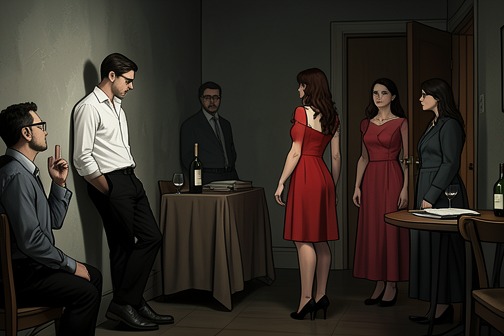
[Yohan and Kazumi Have Sex While Drunk](entity:event-recall-event-yohan-kazumi-e905565f7c56) is the decisive accident at the center of their relationship arc: after four hours of drinking at [Yohan Xyle Laroses](entity:character-recall-character-yohan-xyle-laroses-ef74df86f5bc)’s birthday gathering, a truth-or-dare challenge turns a mistaken kiss into an encounter neither person consciously planned or clearly remembers. What begins in confusion and comic panic becomes the basis for Yohan’s declaration of responsibility, Kazumi’s pregnancy, their shared household, marriage, and eventual family life.
## Causes and Background
The event grows out of an atmosphere in which alcohol has displaced judgment. Four hours into the party, everyone is drunk, and the game of truth or dare continues even though the participants are no longer thinking clearly. When Yohan is asked to choose between truth and dare, he gives the answer that exposes him to the decisive reversal: he accepts a dare to kiss the person sitting in front of him. That person is [Kazumi Lhynx Valeres](entity:character-recall-character-kazumi-lhynx-valere-56963f26306e), who is also heavily intoxicated.
The dare depends on a mistaken identity. Yohan believes that Kazumi is [Vixon Rae](entity:character-recall-character-vixon-rae-39eead992407), the person he expects to be facing, while Kazumi is actually the longtime friend who once knew Yohan before becoming his assistant. The error is not corrected before the kiss begins. The scene therefore joins two forms of disorientation: the physical confusion produced by alcohol and the emotional confusion produced by Yohan’s assumption that he is kissing someone else.
## Course of the Encounter
The kiss begins as a party challenge but does not remain a brief performance for the group. While Carl cries loudly nearby over his former partner Lexie, Yohan moves toward Kazumi, still believing that Kazumi is Vixon Rae. Kazumi returns the kiss, and the contact deepens rather than ending when the dare is technically fulfilled. The other guests decide that the two need to be taken to a bedroom because they are too intoxicated to remain where they are.
The group escorts Yohan and Kazumi to Yohan’s Room 69. They are still kissing as they are led there, and the companions leave them alone under the drunken assumption that nothing serious can result. The narration marks this point as the beginning of the unexpected night. Because both participants are intoxicated, neither knows what they are doing, and the encounter proceeds outside ordinary awareness and memory.
The immediate aftermath is presented through shock rather than recollection. Kazumi is sleeping deeply when Yohan’s loud scream wakes her. Yohan discovers that both of them are naked and reacts with horror, shouting that he has had sex with a girl and that Kazumi has taken his virginity. His reaction makes the mistaken identity and his lack of preparation explicit: what he experiences as an unwanted, humiliating first sexual encounter is also the consequence of believing that he was with Vixon Rae.
The party guests reconstruct the night for them because neither Yohan nor Kazumi can remember it clearly. They remember the truth-or-dare game, the dare to kiss the person in front of Yohan, the deepening kiss, the continued kissing while the pair were being supported to the bedroom, and the possibility that they made out after being left alone. The reconstruction is incomplete and marked by uncertainty, but it establishes the central fact that the accidental intimacy continued beyond the public dare.
## Immediate Stakes and Responsibility
The most consequential detail is that Yohan apparently used no condom. Kazumi recognizes that pregnancy is possible, although the possibility is not framed as an immediate catastrophe: both are twenty-nine, and she considers them old enough to face parenthood. The crisis lies in the lack of intention. The encounter happened unexpectedly, while both were drunk and unable to think properly, and Yohan is already angry with Kazumi because he has misunderstood her.
Kazumi’s fear is therefore relational as much as practical. She hopes that, if she becomes pregnant, Yohan will accept both her and the child rather than reject them. The couple still has four days remaining in the five-day resort stay, leaving the possibility suspended over the rest of their time there. The event creates a future before either character has decided what that future should be.
The later response converts accident into obligation. After the misunderstanding and the discovery of the encounter, Yohan tells Kazumi, "Pananagutan kita," meaning that he will take responsibility for her. He also instructs her to live in his home for the time being. This decision does not erase the fact that the sexual encounter occurred under intoxication; instead, it shows the narrative shifting from confusion to a practical arrangement in which responsibility becomes the language used to organize the consequences.
## Long-Term Consequences
The drunken encounter becomes the origin point of Kazumi’s pregnancy and the child whose welfare later guides Yohan’s decisions. Yohan eventually explains that he proposes marriage because he does not want their child to grow up hurt or confused by seeing either parent with an unknown loved one. He presents marriage as a way to stand firmly behind his responsibility as a parent, even while jokingly accepting the parental label of mother.
Marriage follows as an institutional answer to the instability created by the night. During the ceremony, the formal wording identifies Yohan as Kazumi’s lawful husband, while Kazumi corrects the gendered role by insisting that she is the wife rather than the husband. Their vows nevertheless establish a legally and emotionally recognized partnership. The event that began with a mistaken kiss thus leads to a marriage whose roles do not fit neatly into the conventional language used to solemnize it.
The consequences extend into childbirth and family identity. At the hospital, a nurse addresses both of them as the child’s parents and hands the baby to Yohan. The birth confirms that the night’s possibility has become a living family relationship. Years later, Yohan and Kazumi are still married after having met two decades earlier and having fallen in love ten years before the later account. Their continuing household gives the drunken encounter an outcome far larger than the characters could have imagined when they were left alone in Room 69.
## Narrative and Thematic Significance
The event is built on a sharp value shift. A playful party game produces a kiss; the kiss becomes private sex; private sex produces the possibility of pregnancy; pregnancy demands responsibility; responsibility develops into cohabitation, marriage, and parenthood. Each turn narrows the distance between a temporary mistake and a permanent social bond. The central dramatic force comes from the gap between what the participants think they are doing and what the event makes possible afterward.
The episode also exposes the instability of identity categories within the story. Yohan is introduced as gay and continues to express himself through dressing, makeup, and other feminine presentation. Yet this encounter places him in a pregnancy, marriage, and parenting plot that conventionally belongs to heterosexual romance. Later, the language of husband, wife, mother, and father is repeatedly adjusted around the couple rather than accepted without modification. The accidental night therefore does not simply initiate a romance; it forces the narrative to negotiate among sexual identity, gender expression, bodily sex, marital roles, and parental responsibility.
Its comic treatment of nudity, screaming, virginity, and mistaken identity gives the event a carnivalesque surface, but the consequences are not temporary. The drunken party temporarily overturns ordinary social order: a dare replaces deliberate choice, the employer and assistant become sexual partners, and Yohan’s confident public identity collapses into panic at the sight of his naked body beside Kazumi. The next morning restores practical order through explanation and responsibility, but it cannot restore the earlier relationship unchanged. The unexpected night remains the irreversible hinge on which Yohan and Kazumi’s shared life turns.
Event 7
Kazumi怀孕事件
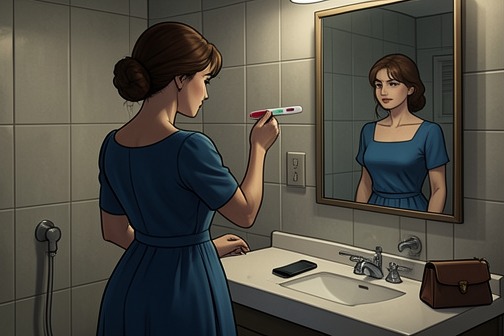
[Kazumi's Pregnancy Discovery](entity:action-recall-action-kazumi-s-pregnancy-dis-fa257c68d3c4) is the decisive reversal that converts an apparently accidental night into the central responsibility binding [Kazumi Lhynx Valeres](entity:character-recall-character-kazumi-lhynx-valere-56963f26306e) and [Yohan Xyle Laroses](entity:character-recall-character-yohan-xyle-laroses-ef74df86f5bc) together. Three weeks after Yohan's birthday, Kazumi's worsening physical symptoms lead her to use a [pregnancy test](entity:object-recall-object-c1f338b98b68) at work; the two lines confirm that she is pregnant and that Yohan is the father. Her immediate decision to tell him initiates the chain of cohabitation, shared parenthood, marriage, and eventual family life that reshapes both characters.
## Causes and Background
The pregnancy follows a birthday-resort drinking session in which everyone becomes intoxicated after approximately four hours of drinking. During a truth-or-dare game, Yohan accepts a dare to kiss the person in front of him. Kazumi is seated directly opposite him, and although Yohan thinks he is kissing [Vixon Rae](entity:character-recall-character-vixon-rae-39eead992407), the person he actually kisses is Kazumi. Kazumi returns the kiss, and the pair continue kissing while the others help them to a room. The account later suggests that they continued making out after being left alone, while also emphasizing that Yohan was not wearing a condom.
The event is therefore framed as unexpected rather than planned. Kazumi recognizes that both she and Yohan were drunk and not thinking clearly, and she also believes that Yohan may still be angry with her because he has misunderstood her. At the same time, she does not treat a possible pregnancy as impossible to accept: both are twenty-nine, and she considers them old enough to become parents. Her anxiety centers instead on whether Yohan will accept her and the child rather than reject them. The pregnancy thus emerges from a collision between impaired judgment, an existing emotional bond, and an unresolved misunderstanding.
## Symptoms and Confirmation
The discovery begins with repeated vomiting at the office. Kazumi keeps returning to the restroom, disturbed because she has never vomited so severely before. The narration places these symptoms three weeks after Yohan's birthday and the night they spent together, allowing the reader to connect the bodily changes with that encounter before Kazumi has proof.
Her suspicion grows through a series of recognizable symptoms. She vomits mostly in the morning and has begun to feel unusually sleepy at work, even though tiredness had not previously been characteristic of her working routine. During lunch, she takes her meal into the restroom because she feels increasingly strange and cannot explain what is happening to her. The physical experience is presented as intrusive and repetitive: work, hunger, nausea, sleepiness, and the need to retreat to the restroom all become signs that her body is changing before she can emotionally prepare for the result.
Kazumi eventually takes a pregnancy test in an empty restroom at the office. She waits five minutes, holding the test with both eyes closed before cautiously opening one eye to inspect it. The appearance of two lines gives the scene its abrupt confirmation. She realizes that she is pregnant and immediately knows who the father is: Yohan. The test does not merely answer a medical question; it fixes the identity of the man connected to the pregnancy and turns an uncertain memory into a concrete future problem.
## Disclosure and Responsibility
After the result, Kazumi decides that Yohan must be told. She is prepared for the possibility that he may drive them away, but she believes he has the right to know. Her decision is direct despite her fear: concealment would leave the pregnancy suspended between private anxiety and public consequence, whereas disclosure forces Yohan to respond.
Yohan's response becomes the first major consequence of the discovery. He tells Kazumi, in an emphatic declaration, that he will take responsibility for her, and he instructs her to live in his house for the time being. This response changes the pregnancy from Kazumi's solitary crisis into a shared obligation. It also alters their professional arrangement: Kazumi is not only Yohan's assistant but now the pregnant person whose welfare he assumes responsibility for, while Yohan is no longer able to treat the night as an isolated mistake.
The language of responsibility remains important because the relationship is not initially described as a simple romantic resolution. Yohan's acceptance is tied to accountability toward Kazumi and the unborn child. Later, when he explains why he proposes, he says that he does not want their child to grow up hurt or confused by the presence of unknown partners, and that marriage will allow him to fulfill his responsibility as a parent. The pregnancy therefore functions as the narrative mechanism through which private intimacy acquires legal, domestic, and familial consequences.
## From Pregnancy to Family Structure
The confirmed pregnancy ultimately leads to a marriage in which Kazumi takes Yohan as her husband. The ceremony formally places them within a marital structure, even though Yohan's own gender expression and sexual identity remain distinctive. The marriage is consequently not presented as a simple erasure of the identities established at the beginning of the story. Yohan is introduced as a gay man and continues to dress, apply makeup, and present himself femininely; he does not complete a planned sex-change procedure or have his penis removed, choosing to keep his body as it is.
The child's arrival gives the earlier confirmation its lasting consequence. At the hospital, a nurse presents the newborn to Mrs. and Mr. Laroses, and Yohan takes the baby into his arms. The pregnancy that began in drunken confusion has become a visible family relationship involving both parents and their child. The medical handover marks a transition from anticipated responsibility to lived parenthood, while the reference to breastfeeding, vitamin K, eye drops, measurements, footprints, screening, pediatric examination, and the first bath places the birth within a sequence of ordinary care.
Ten years after the marriage and the later development of their love, Yohan and Kazumi are still together. At ages thirty-eight and thirty-nine, they remain a family, and their child accepts Yohan's ongoing feminine self-expression without seeing anything wrong with it. The long-term outcome gives the pregnancy event a retrospective significance: what begins as an unintended consequence of intoxication becomes the origin point of a durable household, though the story preserves the unusual tension among sexuality, gender expression, marriage, and parenthood rather than resolving it through conventional normalization.
## Narrative and Thematic Significance
The event is built around a sharp contrast between bodily certainty and emotional uncertainty. Kazumi's vomiting, sleepiness, and the two-line test provide increasingly concrete evidence, while her fear about Yohan's reaction reflects the instability of their relationship. The pregnancy is not discovered through a planned medical appointment or a calm conversation; it is recognized privately, in an empty office restroom, by a woman who must interpret her own body before she can ask another person to share the consequences.
It also exposes the story's treatment of alcohol, sex, and responsibility. The sexual encounter occurs after prolonged drinking, amid a dare and a mistaken identity, and the characters later recall it imperfectly. The narrative treats the incident in a comic, impulsive register while giving it serious consequences: lack of contraception results in pregnancy, and pregnancy demands decisions about disclosure, housing, parenthood, and marriage. That tension between comic framing and irreversible consequence is central to the event's function.
Finally, Kazumi's Pregnancy Discovery reorganizes the identities of both protagonists. Kazumi moves from assistant and former best friend to pregnant partner and mother. Yohan moves from Kazumi's gay employer and emotionally complicated friend to acknowledged father, cohabiting partner, husband, and parent. The child becomes the stated reason for several later choices, but the event also creates the conditions under which affection can deepen into love. Its decisive significance lies in that double movement: the pregnancy imposes responsibility from outside the characters' plans, yet it also gives their fractured, ambiguous relationship a shared future they must actively choose to inhabit.
Event 8
Yohan承认父亲身份
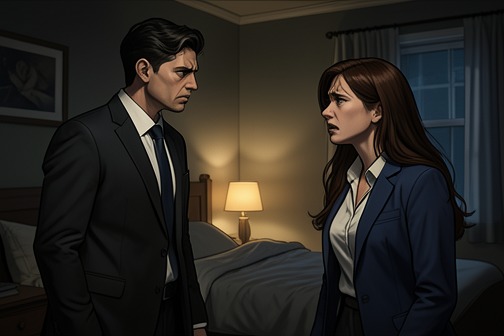
[Yohan Accepts Responsibility](entity:action-recall-action-yohan-accepts-responsi-1ccf1356f9f9) is the turning point at which Yohan stops treating [Kazumi's pregnancy](entity:state-recall-state-kazumi-s-pregnancy-b35b6fc48f30) as an unwanted complication and deliberately assumes responsibility for Kazumi and their unborn child. The decision is not presented as the immediate triumph of romantic certainty: it arises from shock, divided loyalties, resentment, and an ethical recognition that the child should not be abandoned. That tension gives the event its importance. Yohan's acceptance changes an accidental pregnancy into an ongoing arrangement of protection, medical care, cohabitation, and eventual parenthood.
## Causes and Background
The decision follows a birthday-party night in which everyone became drunk after roughly four hours of drinking. The next day, Kazumi learns from Henderson's account that a truth-or-dare game led Yohan to kiss the person in front of her; Yohan mistook Kazumi for Vixon, but the kiss deepened, and the two continued making out while being taken to a bedroom. The group left them there while both were still intoxicated. Kazumi also realizes that Yohan apparently used no condom. She does not describe the pregnancy as impossible or reject the possibility of having a child, but she emphasizes that the encounter was unexpected, occurred while both were drunk, and came amid Yohan's anger and misunderstanding toward her. Her fear is therefore not only physical or practical: she hopes that Yohan will accept the pregnancy rather than drive her away.
The pregnancy becomes undeniable when Kazumi examines a [pregnancy test](entity:object-recall-object-c1f338b98b68) and sees two lines. She tells Yohan directly, showing him the test. His immediate reaction is shock: he becomes silent and pale, says that he needs to go to the bathroom, and leaves the room. From Yohan's point of view, the possibility he had only been overthinking has suddenly become real. He does not know whether he should take responsibility for Kazumi, and his uncertainty is intensified by his relationship with Vixon. Yohan worries that Vixon, who is hostile toward Kazumi, will resent him for accepting responsibility and that their increasingly intimate, almost romantic connection will be damaged.
## The Decision and Its Immediate Form
Yohan resolves the conflict in the bathroom before returning to Kazumi. His reasoning is starkly practical: because he has pity for the child, he will take responsibility for Kazumi. He also recognizes that neither of them is a child; both are twenty-nine, and the person who causes a pregnancy should not simply run away. Yet his decision remains emotionally incomplete. He still says that he does not like the child's mother, so responsibility is initially separated from affection. The scene therefore shifts the value of the pregnancy from abandonment toward protection without pretending that resentment has vanished.
When Yohan returns, Kazumi is still waiting for him. With his arms crossed and an affected, guarded manner, he tells her that he will take responsibility for her. Her smile records the immediate consequence: the threat of rejection has receded. He then instructs her to live at his house for the time being. This offer turns responsibility into a material arrangement rather than a promise in the abstract. Kazumi is given a place within Yohan's household, while Yohan accepts the continuing proximity that the pregnancy will require.
The language and manner of the exchange preserve the contradiction at the center of the event. Yohan presents the decision with theatrical attitude rather than tenderness, but the content is protective and binding. His conduct recognizes a parental obligation even while his feelings remain entangled with anger, misunderstanding, and Vixon. Kazumi's response, by contrast, makes visible how much the decision means to her: the feared outcome was not merely an uncomfortable conversation but the possibility that Yohan would deny both her and the child.
## Responsibility as Ongoing Practice
Yohan's acceptance becomes a repeated practice of care. By seventeen weeks, Kazumi's pregnancy is beginning to show, though the bump is not yet large, and Yohan accompanies her to medical checkups. Their next obstetric appointment is already scheduled, while they continue concealing the pregnancy from Vixon. The decision thus creates both a caregiving routine and a secrecy policy. Yohan is publicly situated as someone whose assistant remains apparently unpregnant, yet privately he participates in the medical progress of the pregnancy.
Domestic life adds a comic but concrete dimension to this responsibility. After a checkup, Yohan reports that the baby is healthy, while Kazumi is experiencing cravings and wakes him in the early morning to obtain [Goldilocks mamon](entity:object-recall-object-goldilocks-cf3fc0a466f6). He complains about the interruption and the late-night disturbance, but the complaint itself shows that he has entered the daily obligations of pregnancy. Responsibility is no longer confined to the moment when the test is revealed; it reaches into sleep, food, appointments, and the ordinary inconveniences of shared life.
Kazumi also learns how to use Yohan's obligation as leverage. When he resists a demand, she threatens to tell Vixon that he made her pregnant. Yohan immediately pulls her hand away from the cell phone and gives in. The exchange is playful in tone, but it reveals the unstable power structure created by the pregnancy. Yohan possesses the house, the company, and economic authority, while Kazumi possesses knowledge that could disrupt his relationship with Vixon. Their arrangement is therefore sustained by both care and mutual vulnerability.
## Protection, Violence, and Institutional Consequences
Yohan's commitment is tested when Kazumi is harmed. A doctor tells him that the baby is strong and that they are very lucky, but questions why Kazumi suffered such severe bleeding. Yohan explains that he was in a meeting, sensed that something was wrong, returned to the office, and found Kazumi bleeding; he identifies Vixon as the person who hurt her. The doctor advises him to dismiss Vixon, restrict Kazumi's movement, and ensure that she rests while taking the prescribed medicine and vitamins. Medical authority converts Yohan's private decision into an urgent protective duty: the pregnancy now requires physical safety, supervision, and treatment.
Yohan's protection also becomes verbal and managerial. When [Xan](entity:character-recall-character-xan-d4c69e4f752f) insults Kazumi and presents himself as kind toward her, Yohan rejects the performance. He accuses Xan of acting pleasant only to gain Kazumi's affection and predicts that Xan would replace, deceive, and eventually tire of her. Yohan orders him to leave. The confrontation shows that accepting responsibility has altered Yohan's tolerance for threats and humiliations directed at Kazumi, even though his own earlier attitude toward her was hostile.
After the workers call the police, Vixon is imprisoned for two years. Yohan feels more secure because Vixon is no longer free, though he still believes that Kazumi and he must remain careful. The consequence is double-edged. Vixon's removal makes Yohan's work more difficult because he has lost an assistant who handled organization, but Yohan accepts the burden and manages alone. Responsibility therefore expands from emotional recognition to a reorganization of work, security, and domestic dependence.
## From Pregnancy to Parenthood
The decision reaches its clearest fulfillment at the birth. During labor, Yohan stays with Kazumi while she curses and pinches him; he allows it, acknowledging that he would probably behave similarly in her situation, and continues comforting her. When the doctor announces that the baby is almost out, Yohan becomes physically overwhelmed, but he remains present through the final push. Kazumi's screams are replaced by the baby's crying, converting the earlier uncertainty of the pregnancy into an audible and irreversible arrival.
The hospital scene makes Yohan's role public and embodied. A nurse addresses the newborn's parents as Mr. and Mrs. Laroses, and Yohan carries the baby. He plays with the child while Kazumi rests and suggests the name Yoshiro Kenzie. The nurse explains the immediate newborn care: breastfeeding, a vitamin K shot, eye drops, measurements, footprints, screening tests, a pediatric examination, and likely a first bath. These details place Yohan's original promise within the institutional sequence of parenthood. What began with two lines on a pregnancy test ends with medical care, named kinship, and a child held in his arms.
As an event, Yohan Accepts Responsibility changes the story's central direction from possible rejection to shared parental life. It does not erase the drunken circumstances, the absence of a condom, the unresolved conflict with Kazumi, or the danger posed by Vixon. Instead, it binds Yohan to the consequences of all those conditions. His acceptance is first motivated by pity for the child and a sense of duty, then sustained through housing, appointments, food, defense, emergency care, and labor. Its decisive significance lies in that progression: responsibility begins as a reluctant choice, but the narrative repeatedly tests it until it becomes the practical foundation of a family.
Event 9
Yohan's Clash with Xan and Xan's Dismissal

[Yohan's Clash with Xan and Xan's Dismissal](entity:event-recall-event-yohan-xan-xan-fabd360230fc) turns Kazumi's private living arrangement into an open confrontation: [Xan](entity:character-recall-character-xan-d4c69e4f752f) follows her and Yohan to [Yohan's Mansion](entity:location-recall-location-yohan-40e1bed9fdd2), accuses her of encouraging his courtship, and then insults her pregnancy and [Yohan's gay identity](entity:state-recall-state-yohan-s-gay-identity-c2b61d41e979). Yohan answers with physical violence and threats to fire him. The confrontation makes his promise to take responsibility for Kazumi and her child tangible, but it also leaves the distinction between personal protection and an employer's power pointedly unsettled.
## Causes and Background
Yohan had already told Kazumi that he would take responsibility for her and that she could live at his home for the time being. That arrangement, made in response to her pregnancy, is the immediate fact Xan discovers. He says he had often seen Kazumi ride home with Yohan and assumed Yohan was merely giving her a lift; after following their car, he saw her enter Yohan's Mansion. His arrival at the gate is therefore not a chance encounter: he has deliberately traced the pair to learn where Kazumi is staying.
Xan treats the shared home as evidence that Kazumi has concealed something from him and has led him on. Kazumi rejects that account. She says she had already told him she was pregnant and had asked him to stop pursuing her, warning that his persistence would only leave him hurt. Her answer makes the conflict more than a dispute over what Xan saw: it is also a clash between his interpretation of her boundaries and her insistence that she had stated them plainly. His disappointment does not, in her view, make her responsible for his continued hopes.
## The Confrontation at the Gate
Xan's accusation escalates into abuse. He claims Kazumi changed after becoming pregnant by a gay man, wishes death on the baby, and describes both the child and Yohan as burdens on society. Kazumi is stunned by the attack. The cruelty targets her pregnancy and Yohan's sexuality together, turning a disagreement about courtship into an attack on the family Yohan has agreed to support.
Yohan has been standing behind Kazumi without her knowing. He suddenly grabs Xan by the hair, slaps him, and punches him hard enough to bloody his nose. He threatens to make sure Xan loses his job the next day. The household staff try to restrain Yohan, but Kazumi tells them to let him continue, speaking calmly while her anger remains evident. Her response is not a separate physical attack; it is an explicit refusal to intervene on Xan's behalf while Yohan retaliates.
## Protection, Power, and Xan's Motives
Yohan's intervention is both personal and professional. He acts after hearing Xan wish harm on Kazumi's unborn child, yet he invokes his control over Xan's employment as part of the confrontation. The threat of dismissal is thus bound to Yohan's protective anger: the same scene that establishes his willingness to defend Kazumi also shows how readily his position as employer enters a private conflict. The account records the threat and the staff's attempt to stop the beating, not a formal procedure for ending Xan's employment.
In a subsequent exchange, Xan begins to apologize, but Yohan cuts him off. He calls Xan's earlier remarks below the belt and says he had noticed Xan's arrogance but had not removed him from the company sooner. Yohan then accuses him of merely performing kindness to win Kazumi over, and argues that if she had accepted him, he would have replaced her, deceived her, and eventually tired of her. That prediction belongs to Yohan's accusation; the scene does not independently establish what Xan would have done in a relationship. Yohan nevertheless treats the contrast between Xan's apparent attentiveness and his cruelty at the gate as evidence that the attentiveness was false.
## Consequences and Narrative Significance
The confrontation changes the terms of Kazumi's rejection. Before Xan appears at the gate, she has already told him to stop pursuing her; now Yohan's commitment and their shared home are visible facts that Xan cannot reinterpret as a simple ride home. Yohan's promise to take responsibility for Kazumi becomes more than private reassurance when he physically defends her and threatens consequences for an employee who attacks her and the baby verbally.
The episode's employment outcome remains narrower than its title's language of dismissal might suggest. Yohan threatens to fire Xan the following day and orders him to leave the confrontation; in the later exchange, he says he had not dismissed Xan earlier. The available account therefore confirms an employment threat and a forceful rebuke, but not that a completed firing occurred as part of this episode. That distinction sharpens the scene's central tension: Yohan's defense of Kazumi is unequivocal, while his use of workplace authority is expressed as anger and threatened punishment rather than a documented formal decision. The violence ends the immediate confrontation, but it does not erase the earlier dispute over boundaries or establish that Xan's employment has definitively ended.
Event 10
Vixon拒绝承担Zhara孕责
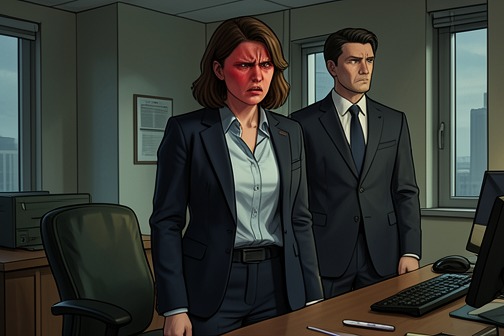
Vixon’s refusal to accept responsibility for [Zhara](entity:character-recall-character-zhara-8eba1de73fec)’s pregnancy is the confrontation in which a concealed sexual relationship, an unwanted pregnancy, and Vixon’s abandonment of Zhara become impossible to deny. Its decisive significance lies in the collapse of Vixon’s self-protective lie: what he treats as a private inconvenience is exposed before Yohan and Kazumi as a matter involving coercion, betrayal, and an impending child.
## Causes and Background
The conflict begins with Vixon and Zhara having sex in the office. After several weeks, Zhara experiences signs of pregnancy and buys a [pregnancy test](entity:object-recall-object-c1f338b98b68), which produces a positive result. She and Vixon then take leave together because she tells him that she is pregnant. Zhara expects him to accept responsibility, but Vixon responds by swearing at her, driving her away, and refusing to acknowledge any obligation toward her or the child.
The dispute therefore carries two opposed claims. Zhara presents the pregnancy as the direct consequence of what happened between them and demands that Vixon face its consequences. Vixon instead attempts to detach himself from both the sexual encounter and its result. His position is not merely silence: he openly tells Zhara that he does not care about her, while she insists that he impregnated her and abandoned her in that condition. The emotional charge comes from the gap between her demand for recognition and his effort to erase the relationship.
## Exposure Before Yohan and Kazumi
The confrontation is interrupted when Yohan enters after hearing Vixon and Zhara shouting. Vixon is on the verge of slapping Zhara when the door opens, immediately changing the balance of the scene. Violence that had remained inside the office is interrupted by an authority figure, and Vixon must replace physical intimidation with an explanation. When Yohan asks what is happening, Vixon nervously claims that nothing is wrong, but his evasiveness only heightens Yohan’s curiosity.
Yohan then asks directly whether Vixon has made Zhara pregnant. Kazumi reacts with apparent shock, while Vixon begins to deny the accusation. Zhara prevents him from controlling the account and declares that she has been impregnated by Vixon. Her public statement transforms a disputed private allegation into an openly acknowledged fact. Yohan looks at Vixon in disbelief, and Vixon recognizes that the concealment he has been protecting is close to being exposed.
Yohan makes both participants sit down and asks Zhara to explain what Vixon has done. Her account supplies the sequence that Vixon has tried to suppress: the sexual encounter occurred in the office; she later bought a pregnancy test after noticing symptoms; the result was positive; she and Vixon were absent together because she had told him about the pregnancy; and, instead of accepting responsibility, he cursed at her and rejected her. The ordered questioning gives Zhara a temporary procedural advantage, because her story connects the physical event, the positive test, the absence from work, and Vixon’s refusal into one coherent chain.
## Vixon’s Denial and Counteraccusation
When Yohan asks Vixon for his side, Vixon claims that he is not the father and alleges that Zhara has had another sexual partner. The denial is visibly strained: he stammers as he offers it and internally recognizes that it sounds like an excuse. Rather than answering the specific circumstances Zhara has described, he attacks her sexual credibility, attempting to redirect suspicion from his conduct to her character.
Zhara rejects the accusation and identifies Vixon as the person who impregnated her. The exchange thus becomes a contest between direct testimony and an improvised denial. Vixon’s claim does not erase the earlier facts; it reveals the lengths to which he is prepared to go to avoid responsibility. His refusal changes from evasion into active defamation, making the conflict more damaging to Zhara while also making his own account less credible.
The confrontation later exposes the financial dimension of Vixon’s relationship with Zhara. Zhara asks whether he has used her only for money and threatens him with physical harm if he does not answer. Vixon responds by admitting that he never truly liked her and wanted only her money. He says this as a blunt confession of exploitation rather than as a defense of the pregnancy claim. The admission releases Zhara’s hair, but it does not restore the relationship; instead, Vixon takes the opportunity to punch her and threatens that her being a woman will not prevent him from hitting her.
## Consequences and Narrative Significance
The immediate consequence is the public exposure of Vixon and Zhara’s sexual relationship and of Zhara’s pregnancy before Yohan and Kazumi. Vixon can no longer maintain the appearance that nothing happened, because Zhara’s accusation, the positive pregnancy test, their shared absence, and his own contradictory responses have all entered the same witnessed confrontation. The revelation also establishes that his refusal is deliberate rather than the result of uncertainty: he knows Zhara is demanding accountability and chooses rejection, insult, and violence instead.
The event shifts the value at stake from secrecy to responsibility. At the beginning, Vixon’s priority is preserving his concealment and avoiding personal consequences. By the time Zhara states the pregnancy publicly, secrecy has been lost, but responsibility has not yet been accepted. The exposure therefore produces a reversal without reconciliation: the truth becomes visible while Vixon remains morally and practically resistant to it. His confession that he used Zhara for money intensifies that reversal, because the confrontation reveals not one isolated lie but a pattern of exploitation involving sex, money, abandonment, and physical aggression.
The scene is presented primarily through Vixon’s point of view, whose hostile and self-justifying reactions make him an unreliable interpreter of his own conduct. He treats Zhara’s distress as an annoyance, describes her accusation as a threat to his safety, and regards his chance to strike her as an opportunity. Yet the surrounding actions disclose what his perspective tries to minimize: Zhara is seeking recognition of a pregnancy he caused, Vixon has already rejected her after learning of it, and his denial depends on blaming her. The distance between Vixon’s attitude and the facts revealed in the confrontation makes the event a turning point in the larger pattern of Vixon’s manipulation and eventual exposure.
Event 11
Vixon被Yohan惩处

[Yohan Xyle Laroses](entity:character-recall-character-yohan-xyle-laroses-ef74df86f5bc)’s break with [Vixon Rae Herrares](entity:character-recall-character-vixon-rae-herrares-81522fa420d8) turns a working relationship into a conflict over deception, pregnancy, and responsibility. Once Yohan believes he has seen Vixon’s true character, he stops treating him with his former trust: first he tries to make Vixon support [Zhara](entity:character-recall-character-zhara-8eba1de73fec) and her unborn child while remaining employed, then Vixon is removed from the company and faces police involvement. The rupture does not end with workplace discipline; later, an officer tells Yohan that Vixon tried to kill him.
## Background and Recognition
Yohan’s growing commitment to [Kazumi Lhynx Valeres](entity:character-recall-character-kazumi-lhynx-valere-56963f26306e) provides important context for the conflict. He tells Kazumi that he will take responsibility for her and asks her to live at his home for the time being. In a later exchange, Kazumi threatens to tell Vixon that Yohan got her pregnant. The moment presents Vixon as someone whose knowledge of the pregnancy matters to the people around him, but it does not establish that he already knows. Indeed, the later account explicitly says that Vixon remains unaware of Kazumi’s pregnancy by Yohan.
The decisive change in Yohan’s view comes when he recognizes what he regards as Vixon’s real character. The narration marks this as Yohan finally stopping his foolishness over Vixon and seeing through him. That recognition alters the terms of their relationship: Vixon is no longer treated simply as an assistant whose conduct can be excused, but as an employee whose actions and obligations must be confronted. The story’s emphasis is on Yohan’s changed judgment, rather than on a single explanation of how Vixon’s earlier conduct began.
## Responsibility and Workplace Discipline
Yohan’s response to Vixon’s refusal to take responsibility for Zhara’s pregnancy is not immediate dismissal. He decides to keep Vixon employed so that Vixon can continue earning money for the unborn child. At the same time, Yohan plans to assign him more work and to make sure his earnings go to the child or Vixon’s family rather than being spent in bars and on alcohol. The arrangement is both punitive and practical: Yohan uses his authority as employer to restrict Vixon’s choices, while making continued income part of the support he expects for Zhara’s child.
This decision gives the break a complicated shape. Yohan does not equate accountability with simply casting Vixon out; at this point, he wants Vixon to remain able to provide financially, but intends to monitor how the money is used and increase his workload. His approach places family responsibility inside the company’s employment relationship, making Yohan’s personal judgment and managerial power difficult to separate. The arrangement also makes clear that Yohan regards Vixon’s obligation to Zhara as continuing, whether or not Vixon welcomes it.
## Removal and Legal Consequences
The attempted accommodation gives way to a more severe response. After Yohan reports that he was in a meeting, returned to the office because he feared something was wrong, and found Kazumi bleeding, he tells a doctor that he thinks Vixon hurt her. The doctor advises Yohan to fire Vixon and to keep Kazumi resting, and provides medicine for her injury as well as vitamins for the baby. The account presents Yohan’s suspicion and the doctor’s advice; it does not independently establish in that scene exactly what happened to Kazumi or prove who caused her bleeding.
Vixon is subsequently put out of the company by a guard. He shouts and makes a scene as he is escorted away, and the narration presents this outburst as the exposure of a side of him that he had long concealed from Yohan. The change is consequential: Yohan’s recognition of Vixon’s character is no longer only a private conclusion but is accompanied by Vixon’s visible removal from the workplace. At the same time, the account stresses that Vixon still does not know about Kazumi’s pregnancy by Yohan, keeping that secret separate from the confrontation over Zhara and Vixon’s conduct.
The workplace consequences become legal ones when Yohan learns that his workers called the police and that Vixon has been detained. The account says Vixon spent two years at the police station. Yohan is somewhat reassured by the news, though he still believes that he and Kazumi need to remain careful. Even after Vixon is no longer present at the company, the threat associated with the conflict has not, in Yohan’s view, entirely disappeared.
## Later Escalation and Significance
The relationship’s final reported turn is more dangerous than the earlier employment dispute. In a later scene, Kazumi asks what has happened, and a police officer tells Yohan that they must report the matter to the police station because Vixon tried to kill him. Yohan is still staring at Vixon, who appears to be dead. The officer’s statement reframes the rupture as a threat to Yohan’s life, while the scene itself leaves the immediate outcome starkly present rather than offering a further account of the relationship’s repair or resolution.
Across these stages, the conflict moves from changed trust to managed employment, removal, detention, and an alleged attempt on Yohan’s life. Its central contradiction is that Yohan initially tries to make continued employment serve as a means of support for Zhara’s child, even as his judgment of Vixon hardens. That effort does not restore their working relationship. Instead, each escalation makes the distance between employerly discipline and personal conflict more pronounced, until their former connection is displaced by police involvement and direct danger.
Event 12
Yohan和Kazumi和好
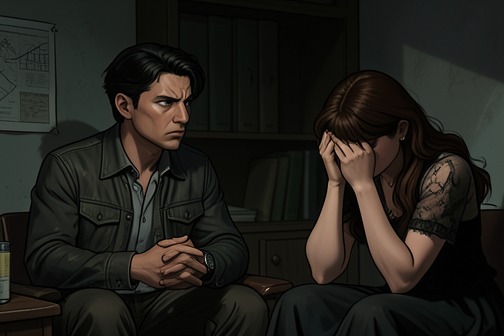
Yohan and Kazumi's reconciliation is the emotional reversal that restores the relationship at the center of the conflict. Once Yohan recognizes Vixon's true character and understands the truth about [Kazumi's pregnancy](entity:state-recall-state-kazumi-s-pregnancy-b35b6fc48f30), his hostility toward Kazumi disappears. The friendship that had been damaged by misunderstanding begins to recover through renewed concern, habitual intimacy, and Kazumi's increasingly difficult awareness that her feelings for Yohan have not vanished.
## The Reversal of Yohan's Anger
The reconciliation becomes possible when Yohan finally stops acting foolishly on Vixon's behalf and recognizes Vixon's true character. Vixon's conduct has disrupted Yohan's schedule and made it difficult for him to concentrate on meetings, while the situation eventually escalates into Vixon being expelled from the company after causing a public disturbance. The exposure changes the direction of Yohan's pain: he had genuinely loved Vixon and believed that Vixon truly wanted him, but discovers that Vixon was pursuing his money instead. The betrayal therefore does more than damage Yohan's relationship with Vixon; it releases Kazumi from the blame Yohan had placed on her.
Yohan's anger shifts fully toward Vixon after he learns the truth. At the same time, he remains unaware that Kazumi is pregnant with his child, and Vixon likewise does not know about Kazumi's pregnancy. This unequal knowledge gives the reconciliation a fragile quality. Yohan can repair his treatment of Kazumi because the truth about Vixon has altered his judgment, yet the larger family crisis still contains a secret that could change the balance again.
## Protection and Renewed Familiarity
The restored relationship is expressed through conduct rather than a formal declaration. Yohan tells Kazumi that he will not allow Vixon to approach her because Vixon might hurt her. His warning connects his new hostility toward Vixon with a renewed willingness to protect Kazumi, replacing the earlier pattern in which Vixon's influence had made Kazumi the target of Yohan's resentment. Kazumi responds by teasing him about his concern and suggesting that he has a crush on her, but Yohan rejects the suggestion by reminding her that he is gay and falls in love with men, not women.
That exchange preserves the distinctive language of their friendship. Kazumi can mock Yohan's protectiveness because the two are once again comfortable enough for joking intimacy, while Yohan can answer sharply without turning the exchange into another rupture. The humor also establishes a tension between what Yohan says about his sexuality and what Kazumi privately feels: his denial of romantic interest does not prevent emotional closeness, and Kazumi's attachment continues to grow inside a relationship that she understands as unavailable.
Their familiar nighttime routine provides an even clearer sign of repair. After they return home through traffic, eat dinner, and retreat to their rooms, neither of them can sleep even though it is already 9:58 p.m. Yohan goes to Kazumi's room because he wants company and conversation. In the past, when sleep would not come, they would text each other, and this remembered habit now becomes an in-person return to the intimacy they had once taken for granted. He finds Kazumi using her cellphone and asks her to talk because he cannot sleep, turning insomnia into a quiet setting for renewed companionship.
## The Pregnancy Secret and Its Stakes
During their conversation, Kazumi asks whether Vixon knows that Yohan made her pregnant. Yohan shakes his head and says that he has no plan to tell Vixon. His reasons change with the collapse of his relationship with Vixon. Before, he kept the pregnancy secret because he loved Vixon and feared that Vixon would reject him. Now he intends to withhold it because Vixon might try to destroy their family. The same secret thus passes from a sign of romantic fear to an act of protection.
Yohan's explanation touches Kazumi because it reveals a concern that his usual harshness conceals. He is still described as irritable and sharp-tongued, but his decision places Kazumi and the child ahead of Vixon's access to the truth. The reconciliation therefore rests on a concrete ethical change: Yohan no longer lets his attachment to Vixon determine how he treats Kazumi, and he begins to imagine responsibility toward the family threatened by Vixon's presence.
The secret also prevents the reconciliation from becoming simple closure. Vixon has been removed from the company, but he still does not know about Kazumi's pregnancy or that Yohan is the father. Yohan's refusal to tell him protects Kazumi in the immediate moment, while preserving the possibility of a later confrontation. The restored bond between Yohan and Kazumi is consequently both intimate and defensive, formed under the pressure of information that must remain concealed.
## Kazumi's Unspoken Attachment
For Kazumi, the renewed closeness carries a private emotional cost. She can openly tease Yohan by asking whether his concern means that he has a crush on her, yet she knows that his stated identity rules out the romance she desires. Her humor converts vulnerability into play, allowing her to test the warmth between them without directly confessing what she feels.
The contrast becomes explicit when Kazumi thinks that Yohan's laughter is cute and wonders whether she is falling in love with him. Yohan's laughter, rather than a grand romantic gesture, becomes the small detail through which Kazumi's attachment gathers force. The reconciliation therefore has an asymmetrical emotional structure: Yohan returns to the ease and protectiveness of their old friendship, while Kazumi experiences that restored ease as evidence of a love she cannot safely claim.
## Narrative Significance
The reconciliation turns the relationship from a casualty of deception into a possible foundation for shared responsibility. Vixon's exposure removes the false loyalty that had governed Yohan's decisions, and Yohan's change in behavior gives Kazumi back the companion who had existed before the conflict. Their late-night conversation, revived joking, and protective arrangement show that the repair is enacted through recurring habits rather than announced as a single decisive apology.
Yet the scene remains suspended between relief and danger. Yohan and Kazumi can laugh together again, but the pregnancy remains hidden from Vixon; Yohan can protect Kazumi, but he still insists that he is not romantically interested in women; Kazumi can enjoy his attention, but her private thought reveals that friendship is becoming inseparable from unrequited love. The event is therefore not merely a return to the past. It is a new form of closeness shaped by betrayal, secrecy, impending parenthood, and the possibility that ordinary companionship may develop into an emotionally irreversible bond.
Event 13
Vixon's Office Relocation Event
[Vixon's Office Relocation Event](entity:event-recall-event-vixon-c79360d76786) is the deliberate transfer of Vixon to a separate company office by Yohan and Kazumi. What begins as an apparently ordinary workplace adjustment becomes a visible act of punishment and exclusion. The relocation removes Vixon from the shared office, reorganizes the hierarchy of the company floor, and demonstrates that Yohan can use architecture, furnishings, and access to regulate a threatening relationship without yet ending the danger Vixon poses.
## Causes and Background
The relocation follows a period in which Vixon's conduct has already damaged his standing with Yohan and Kazumi. The office is not a neutral workplace: it is a space where proximity makes relationships difficult to control, while restricted areas conceal private arrangements and sensitive information. The fifth floor is explicitly treated as restricted, and one character says that only that person knows what is there; the floor also contains a room used for sleeping on occasion. This establishes a recurring spatial logic in which corporate buildings contain hidden personal zones as well as formal work areas.
The broader atmosphere is already charged by suspicion and exposure. Kazumi searches for Yohan and finds him speaking with [Xan](entity:character-recall-character-xan-d4c69e4f752f), remaining unseen while listening from near a large doorway. Xan pleads for another chance and blames Vixon for the wrongdoing, saying that Vixon forced the action and asking not to be dismissed. The relocation therefore occurs against a background of disputed responsibility rather than a simple administrative need. Vixon's influence has become an organizational problem, and moving him is a way to make that problem physically legible.
## Planning the New Office
Yohan proposes the transfer while discussing the available rooms with Kazumi. He identifies a vacant room on the eighth floor as a possible destination, then considers whether another vacant space may exist on the sixth floor. The choice is practical but also expressive: either option would place Vixon away from the office shared by Yohan and Kazumi and would make the separation part of the building's visible structure.
Yohan decides to check for an available room and have it redesigned as an office with furniture. The language of design turns conflict into administration, yet the underlying purpose is unmistakable. He regards continued proximity to Vixon as awkward and seeks a material solution to a personal and professional rupture. When Yohan and Kazumi tour the entire sixth floor, they find a vacant room and choose it as Vixon's new location. The search converts an unsettled grievance into a concrete destination.
## Execution and Humiliation
The new room is prepared before Vixon is properly informed. On a Sunday, Kazumi and Yohan visit the company to inspect the office that was formerly a vacant room. Their own office remains larger and more expansive, and Yohan insists that it should still be more impressive. The comparison preserves their superior position even as Vixon receives a newly furnished space. His office is not presented as an equal replacement but as a controlled concession within a hierarchy Yohan continues to define.
The furniture is installed, and Yohan happily pays the worker with a thick bundle of money. He and Kazumi then leave their office to inspect Vixon's finished room. Yohan admits that the result is attractive, but the approval does not erase the humiliation embedded in the process: the room has been selected, redesigned, and assigned while Vixon is absent. The event's decisive gesture is not merely relocation but dispossession of choice. Vixon loses control over where he works and discovers that the people closest to the decision have treated his exclusion as a source of satisfaction.
Yohan intends to tell Vixon only when Vixon enters the office, informing him that he no longer belongs there and leaving him to find the new room himself. This planned revelation makes the relocation theatrical. It turns workplace orientation into a punishment ritual, with confusion and embarrassment built into the announcement. The move temporarily reverses the pressure Vixon has exerted on Yohan and Kazumi: the person who has threatened their shared space is now made to navigate an unfamiliar one.
## Consequences and Continuing Threat
The relocation produces immediate emotional relief for Yohan. The evidence presents him as delighted that he will no longer have to share an office with Vixon, whose hunger for money has made him especially unwelcome. The separate room therefore functions as a boundary between the pair's increasingly protected intimacy and Vixon's destabilizing presence. It is a spatial version of distrust, translating moral judgment into distance measured by floors and doors.
That distance does not resolve the conflict. Vixon later plots to kill Kazumi and Yohan by hiding [timer bombs](entity:object-recall-object-6c3dc34b74d0) in the garden where they are supposed to hold a date, motivated by his desire to obtain Yohan's money. When Yohan reaches the garden, he finds it already devastated and surrounded by caution tape, with no [CCTV](entity:object-recall-object-0aeb651f1d07) in the area to identify the perpetrator. The damaged garden shows that physical separation and formal security have failed to contain the violence moving through the story's spaces.
The danger eventually crosses from the company into the mansion. While Kazumi works alone in the office after lunch, with Yohan away at a meeting, Vixon appears at the door with hostile intent. Later, Vixon approaches Yohan again, pulls him away from the partly open bedroom door, and points a gun at his head while Kazumi is inside holding baby Kenzie and crying. The earlier office relocation thus becomes an incomplete containment strategy. It can rearrange access, but it cannot permanently remove Vixon from the narrative or prevent him from returning across thresholds that were meant to protect Yohan's family.
## Narrative Significance
The event makes architecture an instrument of power. A vacant room becomes an office, an office becomes a boundary, and the boundary becomes a public statement about belonging. Yohan and Kazumi's authority is expressed through their ability to choose rooms, commission furnishings, control announcements, and decide who may remain near them. At the same time, the building's organization reveals the limits of that authority: restricted floors, hidden rooms, doorways, absent CCTV, and later armed confrontations all show that visibility is partial and security is fragile.
The relocation also carries a bitter irony. Yohan's playful, performative satisfaction turns bureaucratic management into an act of social ridicule, but the apparent victory is temporary. Vixon's removal from the shared office does not end his access to the protagonists' lives; instead, it sharpens the antagonism and helps define the spaces he will later violate. The event matters because it marks both a successful assertion of Yohan's control and an early sign that control over space cannot substitute for safety, accountability, or the resolution of the underlying conflict.